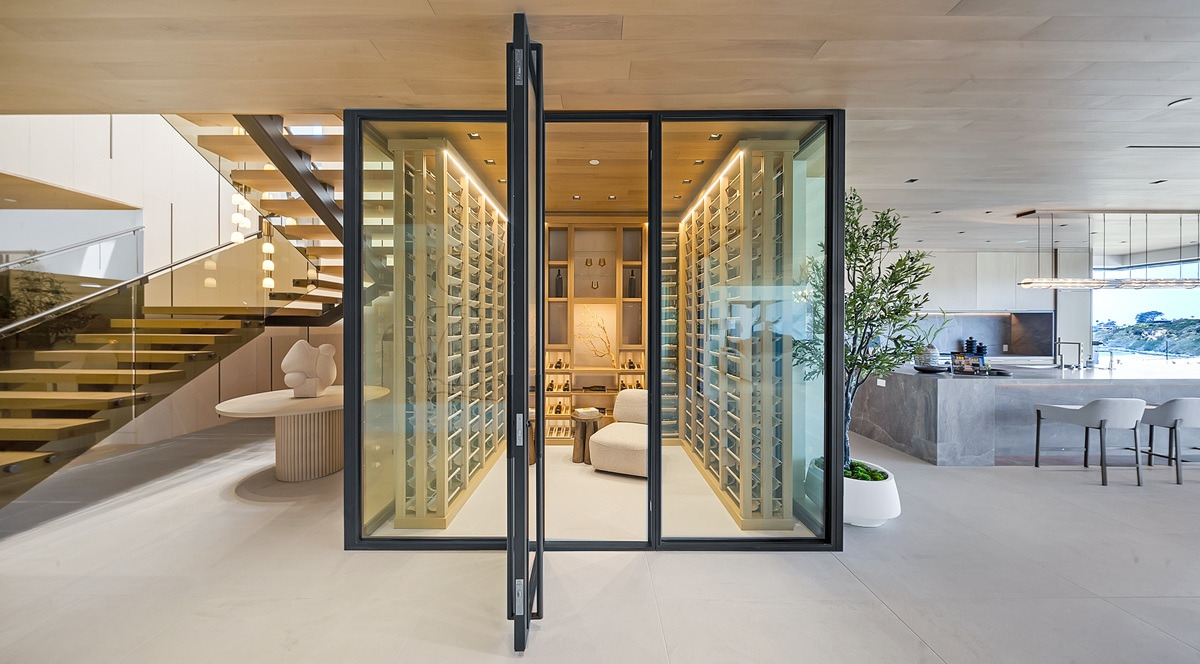
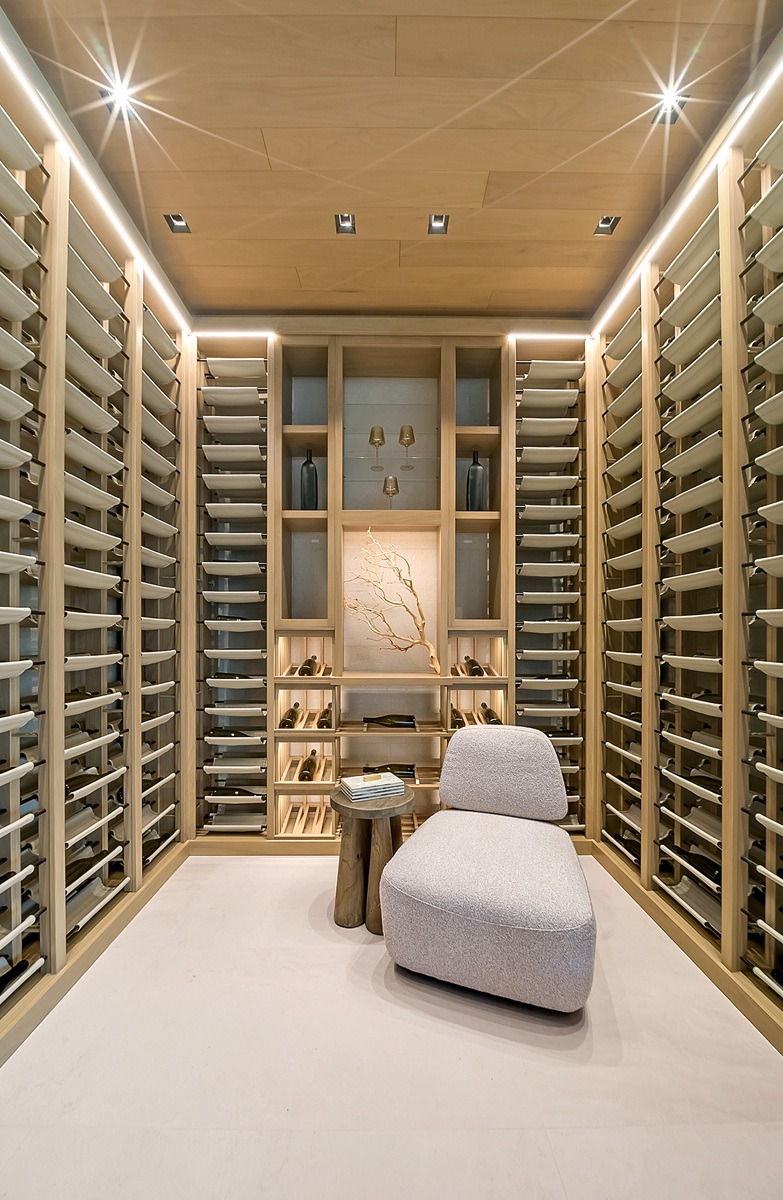
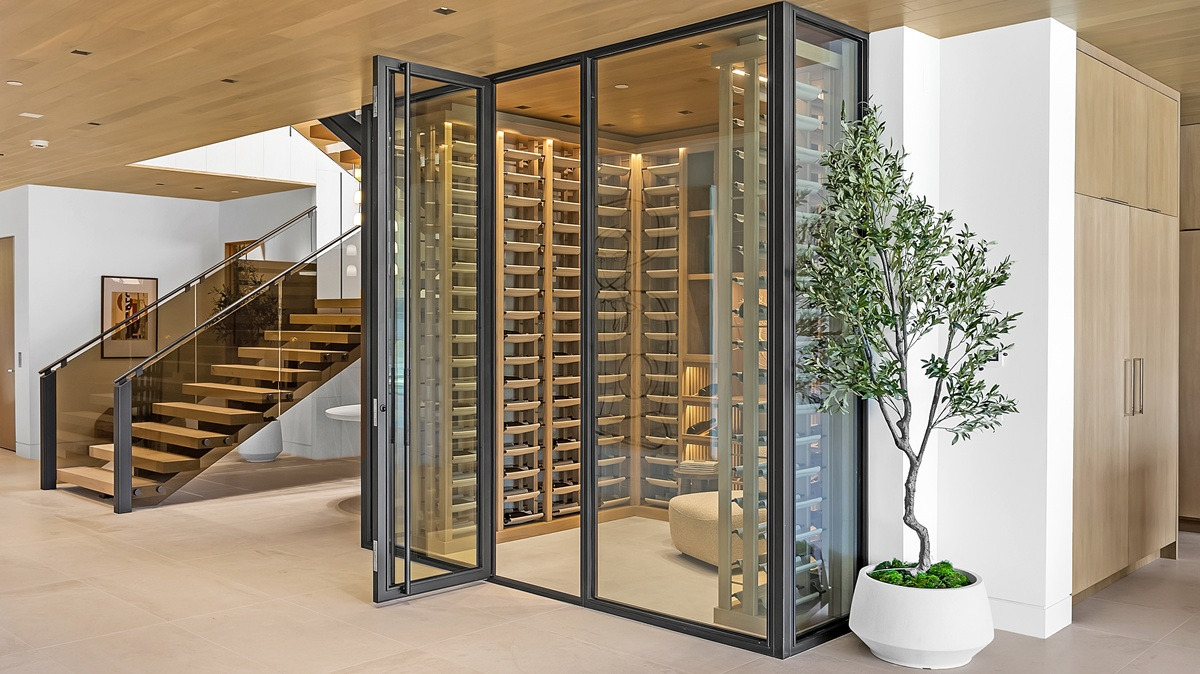
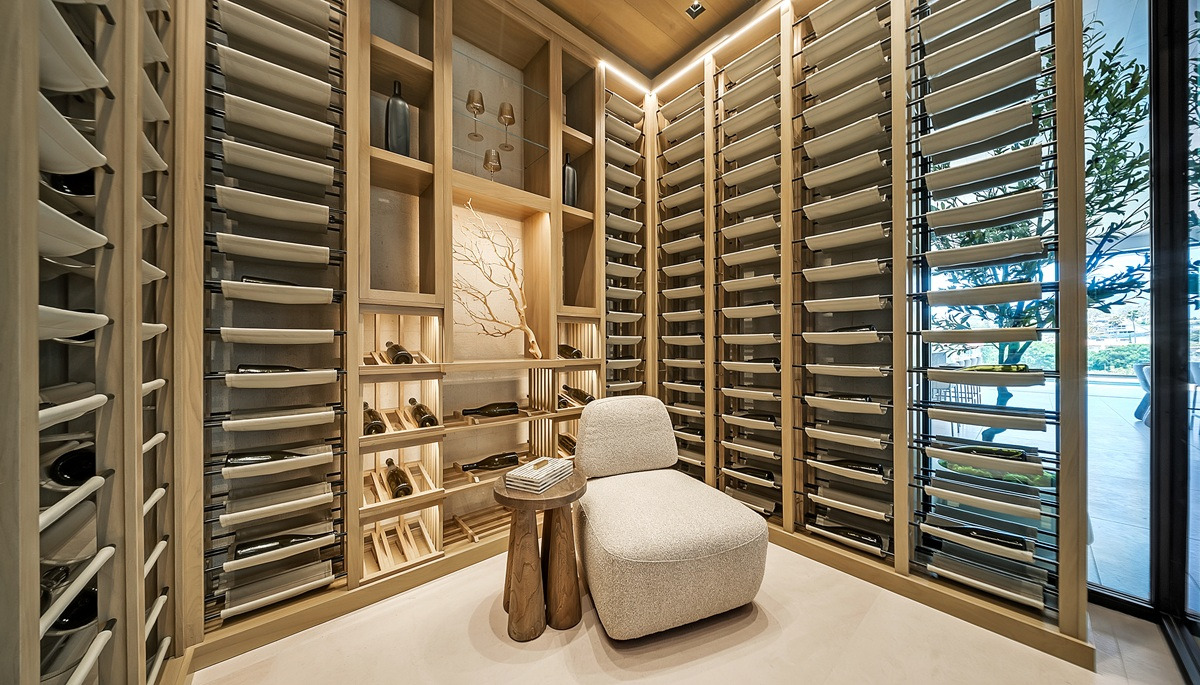
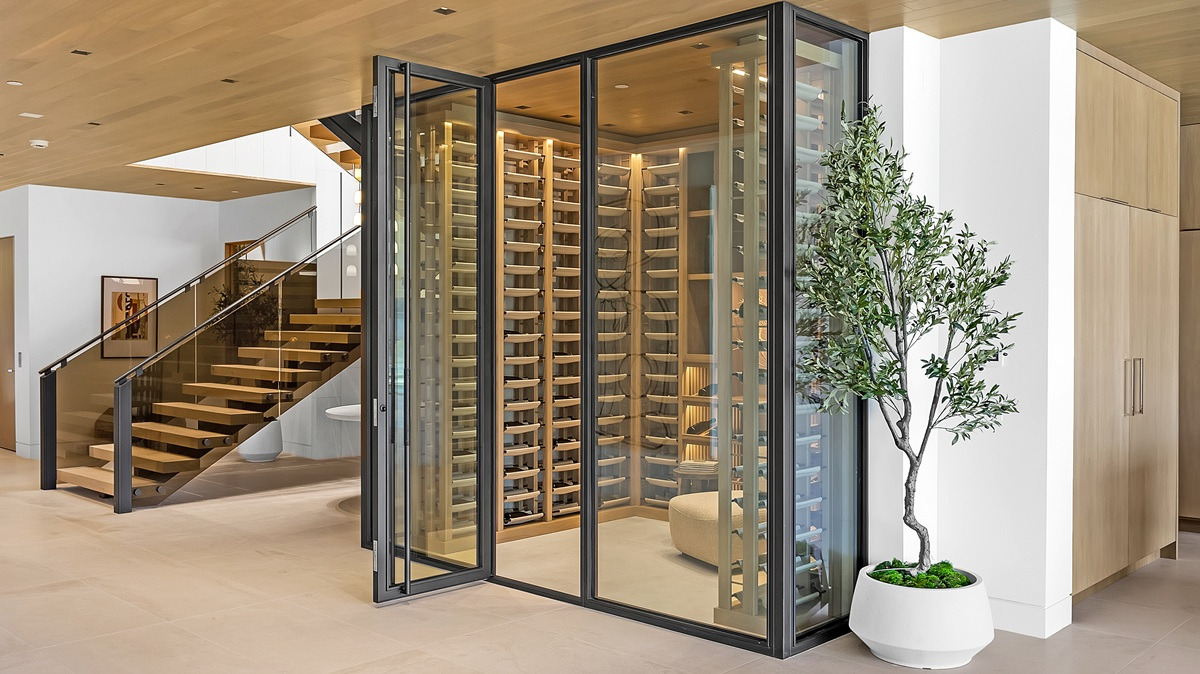
This leather wine cellar is as custom as wine storage gets. Built as part of a complete tear-down rebuild, every detail in this project reflects a homeowner who went all out on the custom features that matter most to them.The result is a transitional design that brings together custom white oak cabinetry, hand-stitched leather “saddles” for wine racking, and a glass enclosure. A 452-bottle cellar that looks and feels exactly like the home it belongs in.
Leather Wine Cellar vs. Traditional Racking System: A Question of Design Intent
The choice between leather saddles and traditional racking isn't really about one being better than the other. It comes down to what the cellar is meant to do — and how visible it's meant to be.Traditional wine racking systems are typically built around maximizing storage within a defined space. On the other hand, wine cellars in the middle of a wide-open space or in glass-enclosed spaces can have a different design intent.Wood pegs, bin sections, and cabinet-style enclosures do that efficiently and reliably. But when showcasing a collection is part of the intention, that's where using “uncommon” materials makes sense, such as glass wine rods or acrylic wine racks.In this luxury Malibu home, leather saddles were the solid choice as the client and designer wanted to achieve a transitional custom wine cellar.
Why We Chose Leather ‘Saddles’ for a Transitional Style Wine Cellar
For this custom wine storage space, the goal was to build a transitional wine cellar that easily translates through the glass enclosure. There needed to be a balance between traditional elements with modern design, and leather is one of the few materials that can bridge classic and modern aesthetics.As a result, leather wine bottle holders (often called “saddles”) were used as the primary racking element and a defining feature of the cellar.
Featured Project: 452-Bottle Transitional Leather Wine Cellar with Custom Glass Enclosure
Our client wanted a space that connected visually to the surrounding living areas. That led to a transitional glass wine cellar that felt open, modern, and fully integrated into the home architecture.Key Wine Cellar Features:
Cellar dimensions: 120" wide × 100" deep × 108" high
452-bottle capacity
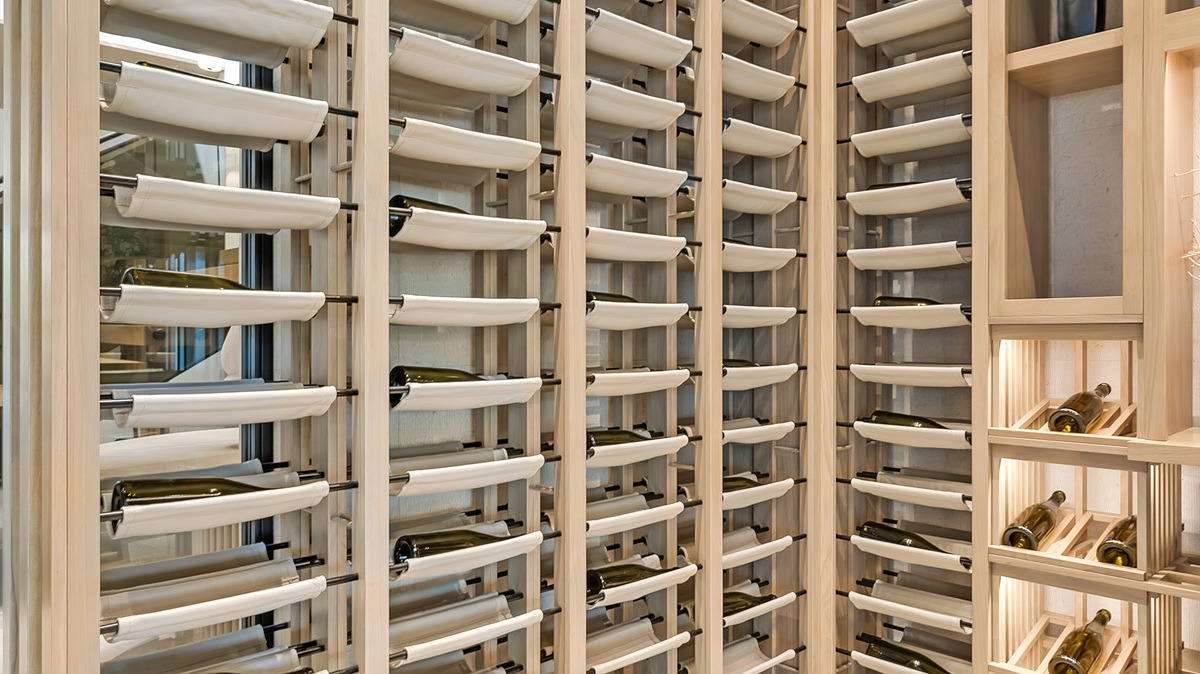
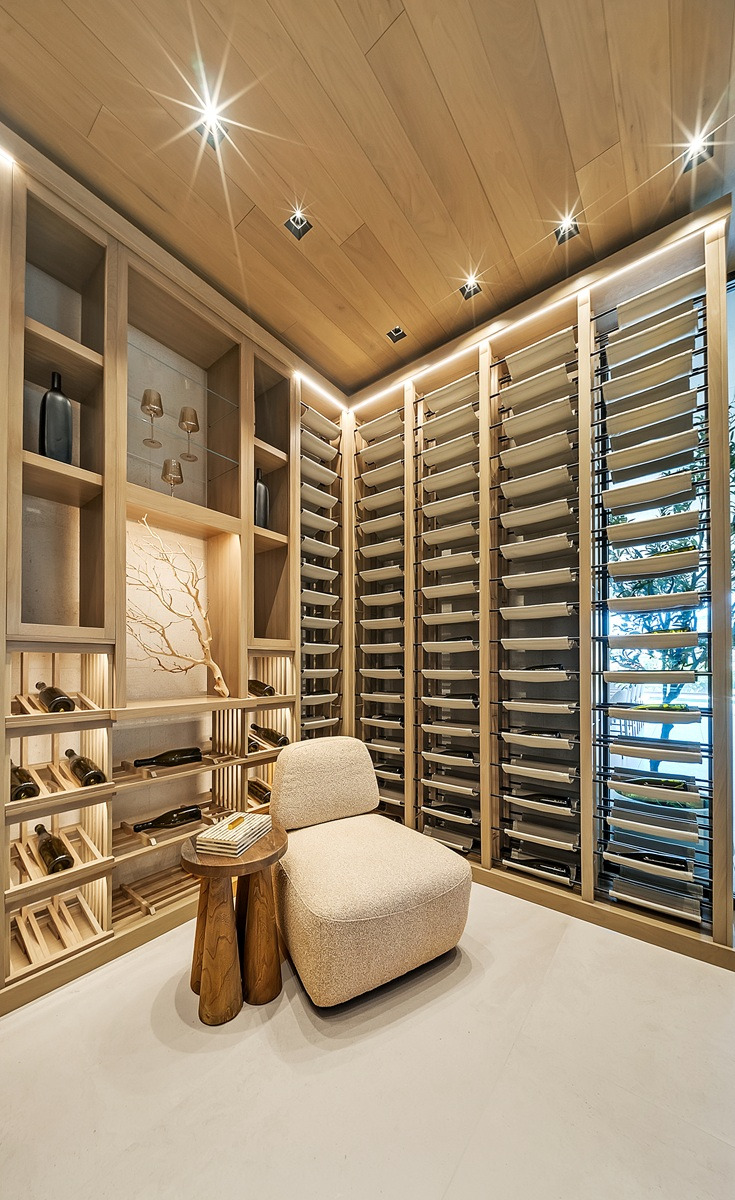
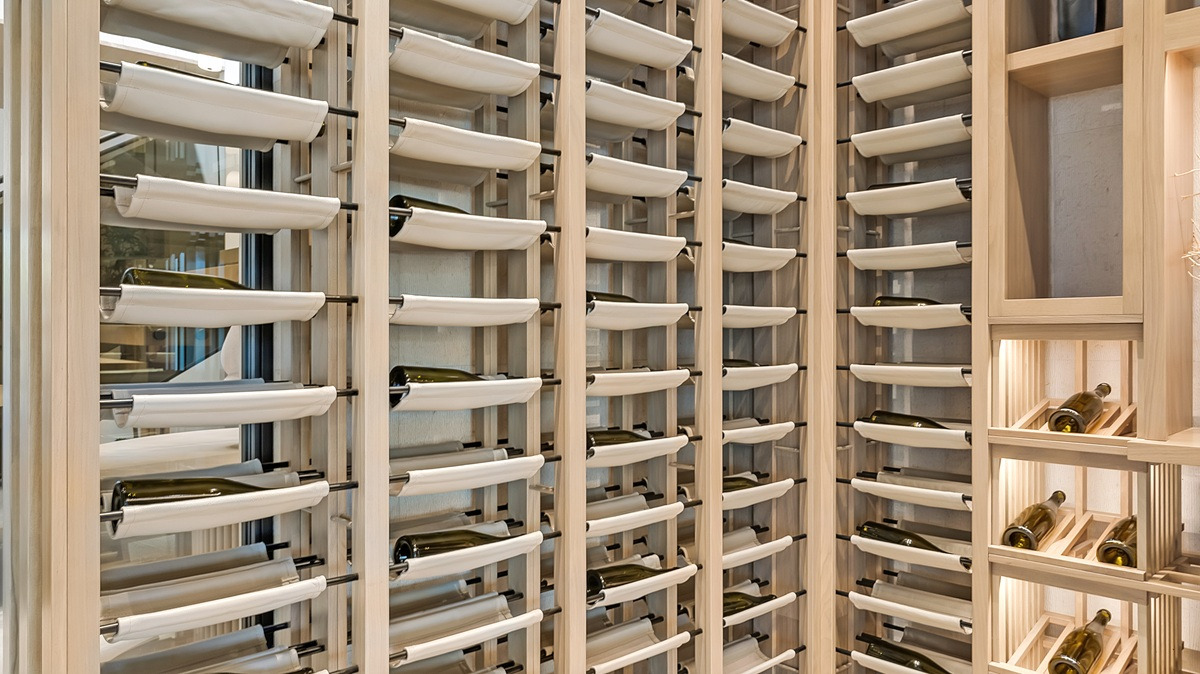
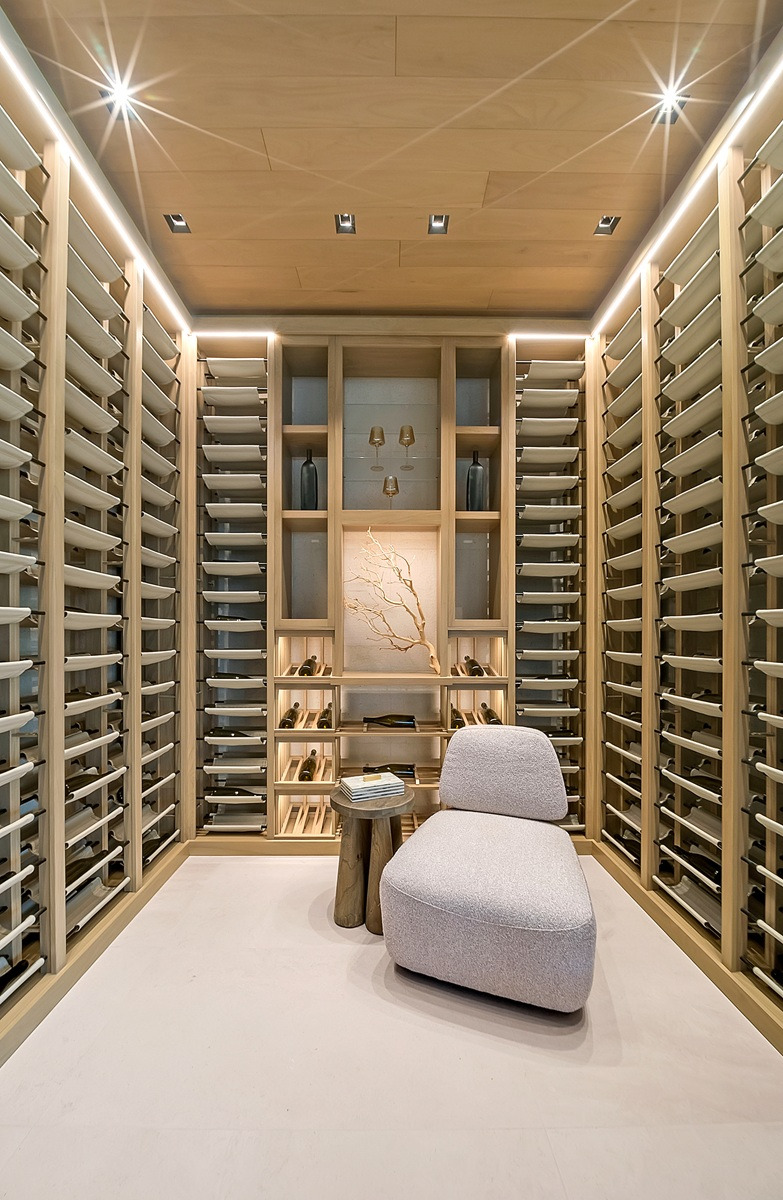
Double-deep wine racking system: Butter-cream-colored leather saddles and black metal rods
Integrated LED lighting valences
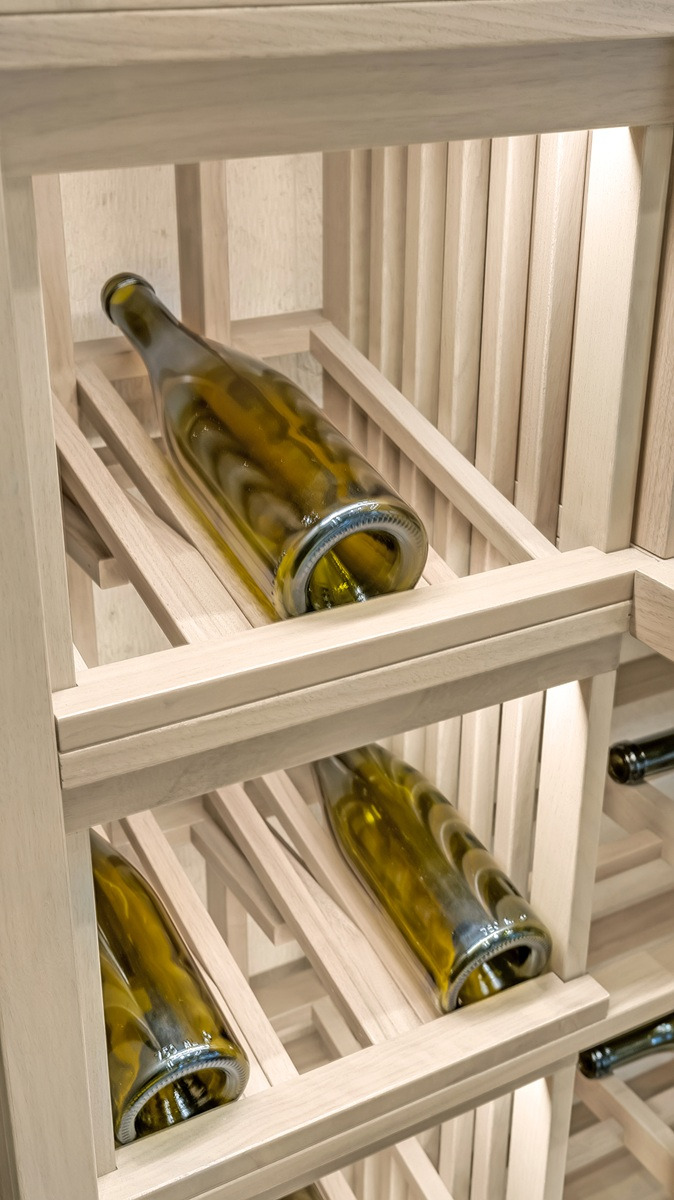
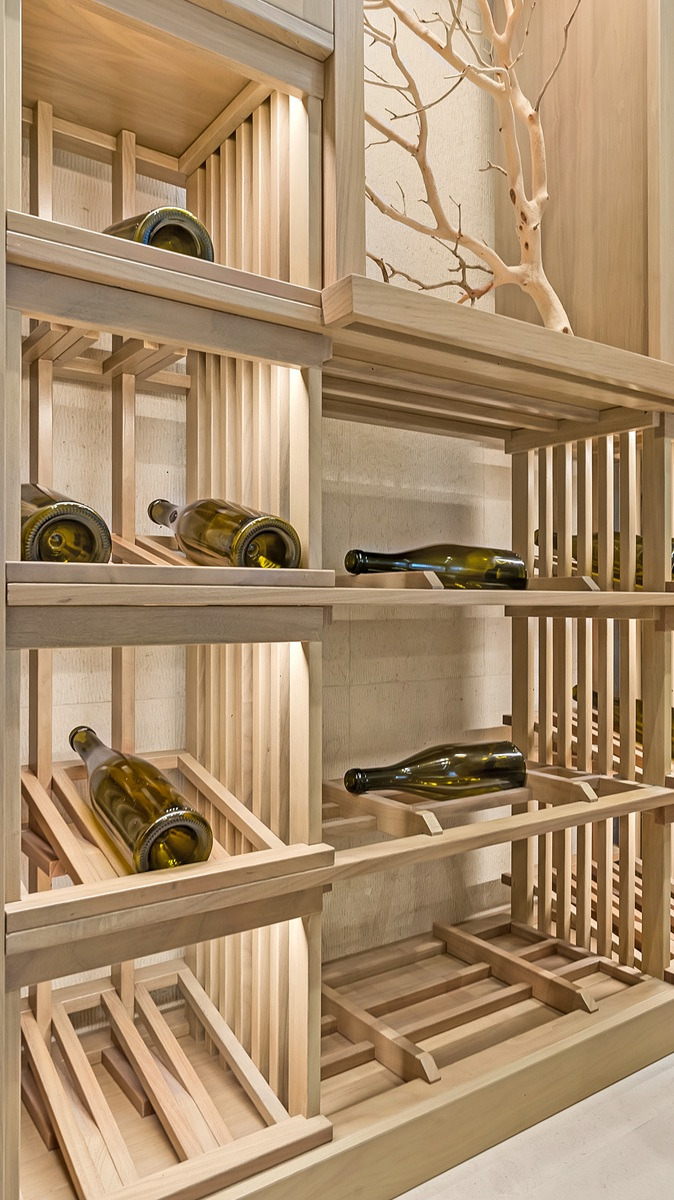
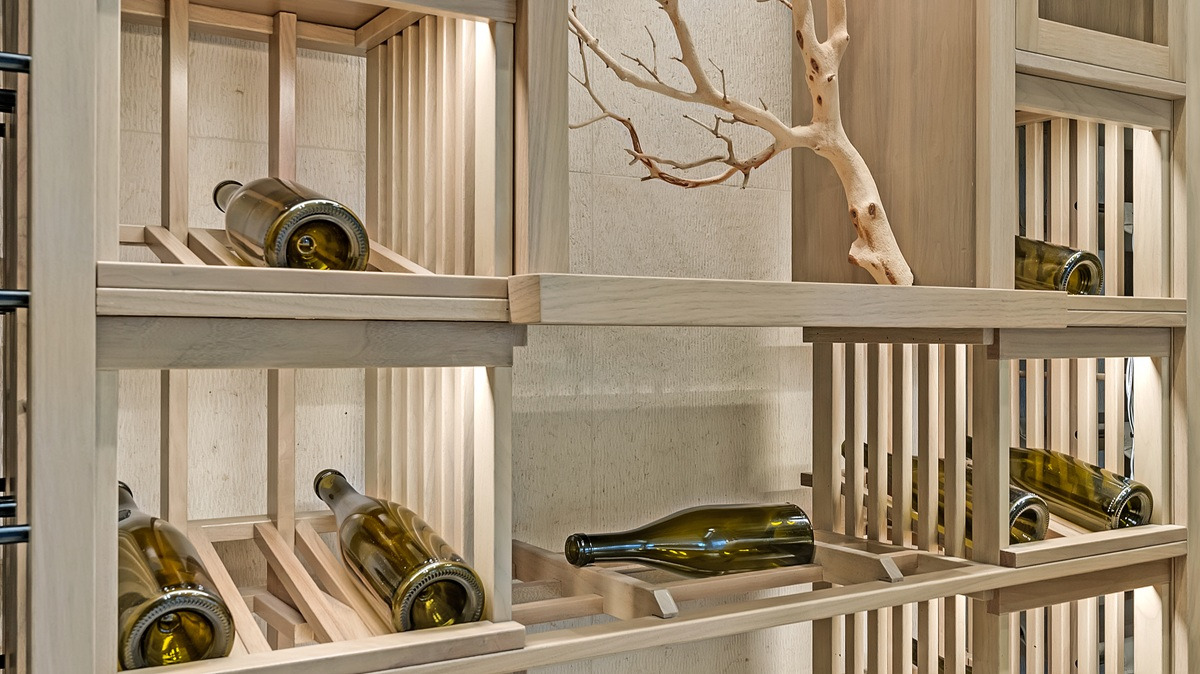
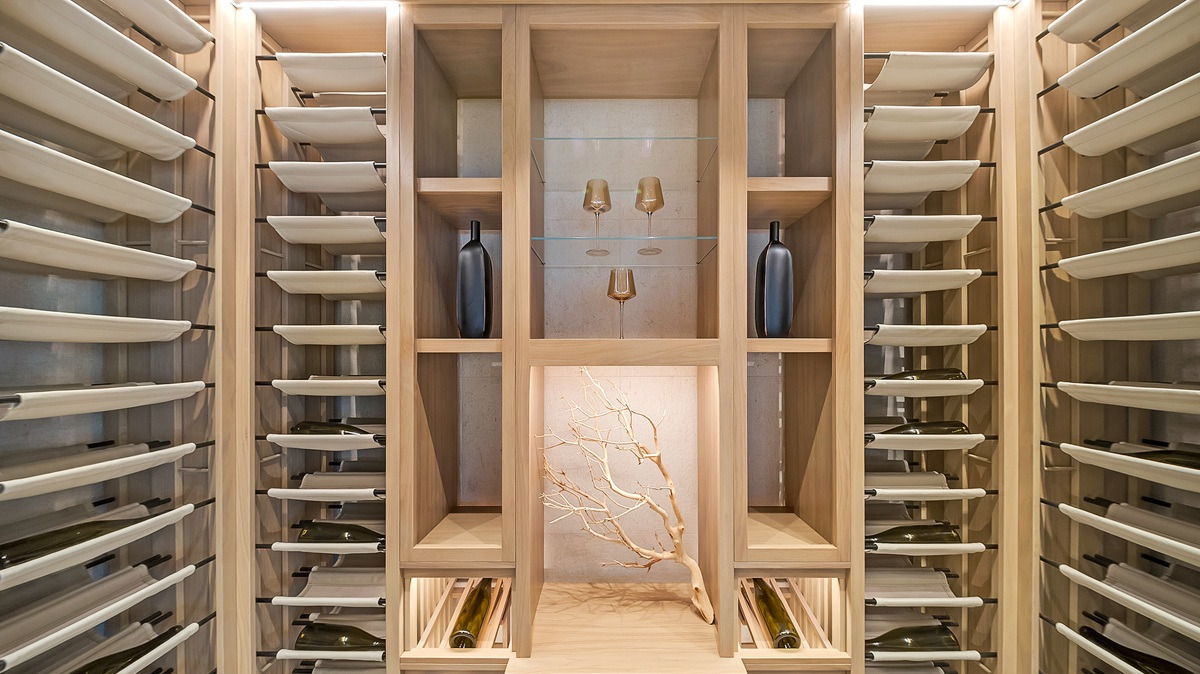
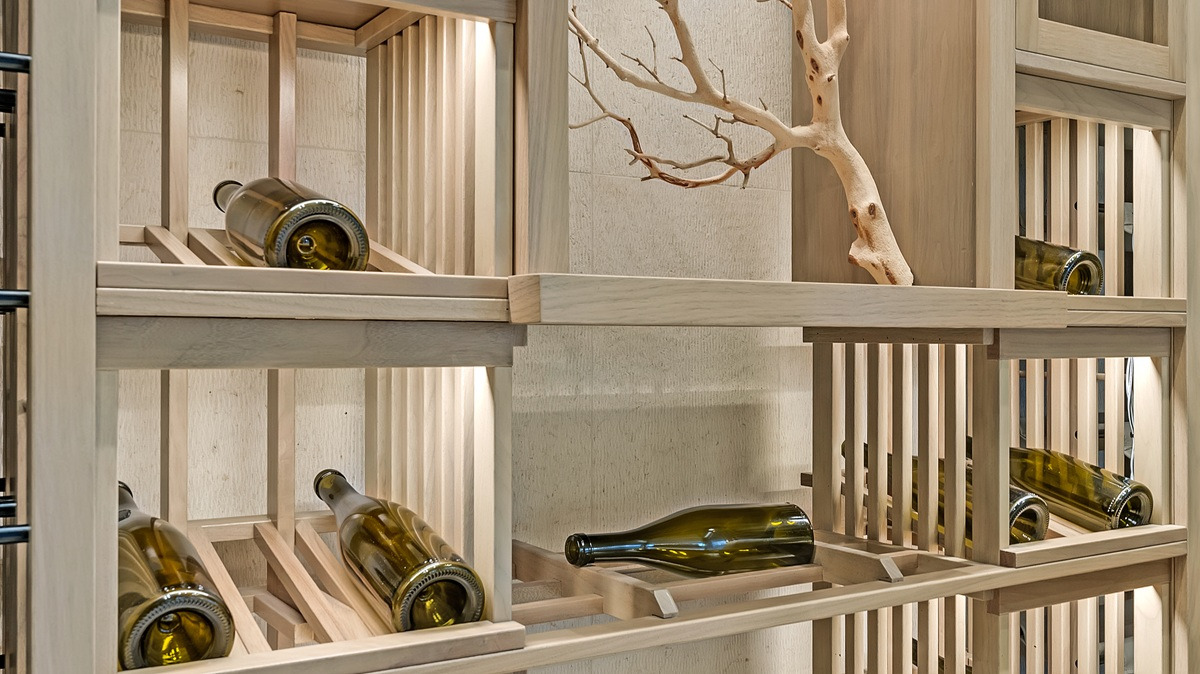
Rift white oak cabinetry: Wood case storage, display areas for magnum and double magnum bottles, angled label-forward displays
Stone tile backwall
Countertop space for decanting
Tongue-and-groove ceiling
Split ducted cooling system
Unlike spec homes that prioritize budget-conscious decisions, this home was built for a specific client with a vision. Every detail was intentional, and the wine cellar reflects that level of customization.
Custom Leather Wine Rack: A Softer, More Luxurious Aesthetic Without Losing Functionality
For this project, we went with a butter cream finish for the double-deep metal and leather wine rack to complement the rift white oak wood for the custom wine cabinet. The leather wine cellar looks beautiful, but it also doesn’t fall short on practical purposes.
Wine Storage Flexibility That Doesn’t Sacrifice the Design
The leather wine racking system in this project runs double deep, maximizing capacity within the cellar's footprint. It also offers more flexibility for storing wine, as each leather saddle can hold standard 750ml bottles, magnums, and splits.
Open Lattice Layout for a Clean Look Through the Wine Cellar Glass Enclosure
Each leather saddle in this cellar is custom-stitched and mounted on a black metal horizontal rod. Instead of having boxy panels, it adds a structural rhythm of a lattice build that keeps the racking system visually open and organized.The open lattice keeps the collection visible, the materials readable, and the space feeling connected to the home rather than sealed off from it.
Custom Glass Wine Cellar Transforms the Space Into a Visual Centerpiece
This leather wine cellar was always meant to be a centerpiece within this Malibu home’s huge open space. The homeowner and their interior designer Megan Craneenvisioned a fully visible, glass-enclosed space. That’s why the glass enclosures are one of the defining features of this custom build wine cellar.
Minimal Steel Framing for Maximum Visibility
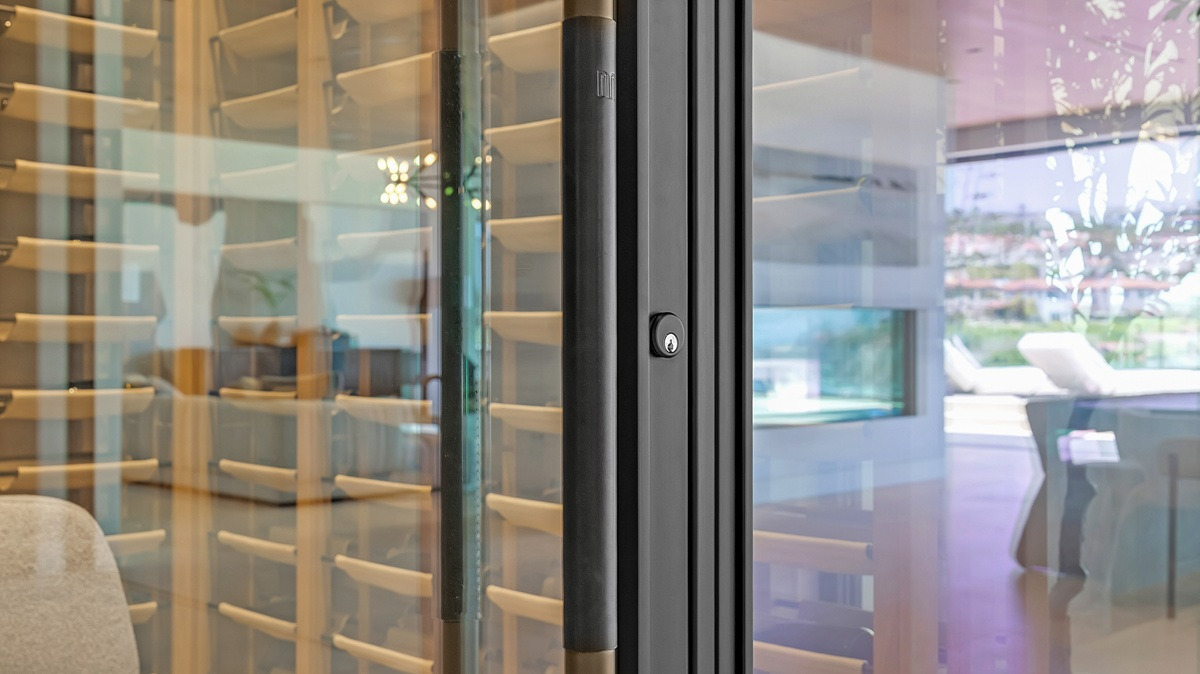
To keep the cellar’s interior fully visible, the glass wine enclosures were designed with ultra-thin steel framing. The enclosure, made by MAIDEN Steel, is also a dual-pane insulated glass to maintain the temperature inside the cellar. The door closes via magnetic catches with weather stripping and a deadbolt lock.
Seamless Integration with the Home
The glass enclosed wine cellar wraps three sides of the cellar — left wall, right wall, and front — with the fourth side serving as the structural back wall clad in stone tile. From most vantage points in the adjacent living space, the entire interior of the cellar is visible.
Custom Rift White Oak Wine Cabinet System for Elevated Storage
The natural grain of the rift white oak introduces a subtle, linear texture that complements the softness of the leather saddles and the bold contrast of the black metal rods.We created a section for wood case storage, angled storage, and open display areas for magnum and double magnum bottles. There is some countertop space for decanting as well.Each element was intentionally designed to support both functionality and presentation. The result is a system that allows the homeowner to organize, display, and enjoy their collection with ease while maintaining the clean, elevated aesthetic of a transitional wine cellar.
Strategic Lighting Design Enhances Texture and Depth of a Wine Cellar
Leather responds to light differently than wood or metal because it develops character under directional illumination. This cellar takes full advantage of that interaction, using layered lighting to highlight both the materials and the collection.
LED Accent Lighting Within Display Rows
Integrated LED lighting runs through the display rows via custom lighting valences built directly into the racking structure. The directional light enhances the visibility of bottles on display, amplifying their presence.
Valance Channel Lighting for Ambient Glow
At the ceiling is a channeled light source that runs along the crown, filling the upper volume of the cellar with a soft, even ambient glow. It reinforces the luxury feel of the room without introducing harsh brightness and creates a sense of depth that makes the cellar feel larger than its footprint.Together, the row lighting and crown lighting give the cellar a layered quality that can shift in mood depending on how it's used.
Hidden Cooling System That Protects Wine Collection Without Disrupting Design
One of the most refined elements of this cellar is the cooling system—because you never see it. There are no ceiling registers, no visible vents, and no mechanical components interrupting the clean, architectural lines of the space.
How This Leather Wine Cellar’s Invisible Cooling System Works
This hidden wine cellar cooling system uses a ducted split configuration. That means the compressor is located outside the home, and an evaporator coil is positioned behind the cellar's back wall.Supply and return ducts are routed through the back wall and into the crown of the cabinetry, which functions as a concealed chase.Cold supply air runs along one side of the crown; a baffle separates it from the return side, which draws warm air back and registers the interior temperature. The entire airflow system is invisible from inside the cellar.
Coastal Wine Cellar Cooling Considerations for Long-Term Performance
This cellar is located near the coast, which introduces a variable that other installations don't face: salt air, which is highly corrosive. The solution is coated coils, which provide meaningful protection.But even coated coils can degrade over time when constantly exposed to salt air, so routine maintenance is essential. A service call once or twice a year is important to check for refrigerant leaks, inspect the coils, and catch early signs of corrosion.With proper maintenance, a well-specified split system near the coast can deliver reliable performance for many years.
Frequently Asked Questions About Leather Wine Cellars
What are leather saddles in a wine cellar?
Leather saddles are custom-crafted bottle holders that cradle each wine bottle individually.
Does leather wine cellar affect wine storage?
Using leather for wine holders and wine racks doesn’t necessarily affect how wine ages, how temperature is maintained, or how the cellar is cooled. They’re primarily a design element, introducing softness, warmth, and custom craftsmanship in a custom wine cellar.
Are leather wine saddles compatible with different bottle sizes?
Yes, they accommodate standard 750ml bottles, magnums, and splits, which adds more flexibility to wine storage.
What maintenance does a coastal wine cellar cooling system require?
For a split system installed near the coast, annual or semi-annual service is recommended. Salt air is corrosive, and even coated coils will require periodic inspection for leaks and refrigerant levels. Routine maintenance significantly extends the life of the compressor.
Designing a Wine Cellar That Becomes the Focal Point of Your Home
This Malibu leather wine cellar project is a clear example of what’s possible when design, craftsmanship, and vision align. From the double-deep leather wine racking to the custom rift white oak cabinetry and high-end glass enclosure, every detail was designed to work together.The result is a wine cellar that turns a collection into a true focal point — one that enhances how your entire space looks and feels.Call Vintage Cellars today and our experts will help you design a wine cellar that feels as intentional as the rest of your home.
We are Wine Storage Experts
Here to Help You with your Custom Wine Cellar
With more than 30 years of building Custom Wine Cellars, we are experts in designing and building Custom Wine Cellars from soup to nuts. We help clients nationwide and would be glad to give you a free design for your custom wine cellar.
Vintage Cellars started building custom wine cellars in 1990. Based in San Macros, California, we have built custom wine cellars throughout the United States.
Our wine cellar design experts are waiting to turn your custom wine cellar dream into a reality. Tell us the style, size, budget, and other details and we will design a custom wine cellar for you.






.png)