Caption
Key Takeaways
Chromotherapy, also called color therapy or color light therapy, uses colored visible light to influence mood, relaxation, and the atmosphere of a space.
Strong evidence for chromotherapy as a standalone medical treatment is limited, though specific forms of light therapy are used in medicine.
In saunas, the most practical benefits are experiential: comfort, calm, visual warmth, and a more spa-like sense of space.
Thoughtful placement, dimming, heat-rated fixtures, and wood coordination often matter more than dramatic claims about the healing power of any single color.
About Chromotherapy: Basics and Definitions
Chromotherapy is an alternative healing method that uses the visible spectrum of electromagnetic radiation to treat psychophysical imbalances and promote health. In simpler terms, it uses colored light, including red light, blue light, green light, yellow, orange, violet, and other different colors, to influence how a person feels in a room.
The idea is not new. Chromotherapy has been used for centuries, with historical records indicating its practice in ancient civilizations including ancient Egypt, Greece, China, and India. In holistic traditions like Ayurveda, the seven colors of the visible light spectrum are mapped to the seven core chakras to correct internal imbalances.
Today, chromotherapy is usually a complementary application in spas, bathrooms, meditation rooms, and custom saunas. Most homeowners are not using it as medicine, but as a design tool: a way to soften the space, support relaxation, and create a more intentional wellness ritual.
How Chromotherapy Influences Mood and Atmosphere
Color and light affect the human brain through vision, memory, association, and the circadian rhythm. Visible light is a form of electromagnetic radiation, and each color has a unique wavelength within the color spectrum. Blue has shorter wavelengths; red has longer wavelengths. The body and brain interpret those differences as visual and emotional cues.
Traditional chromotherapy is rooted in the holistic belief that different colors possess unique vibrational frequencies and wavelengths that can influence the body's energy centers, nervous system, and emotional state. Some sources discuss these ideas through meridians and energy balance, but they should be read as traditional theory rather than proven clinical science.
Mainstream scientific research is more cautious. Studies suggest color can influence arousal, comfort, and emotional response. Warm colors may feel active or intimate; blue and green often feel quiet; soft amber can help a sauna feel calm and grounded.
Vintage Cellars Pro Tip
In sauna design, chromotherapy usually works best when colored light is subtle, indirect, and dimmable. The goal is to shape the feeling of the room without making the space feel theatrical or overstimulating.
Chromotherapy Versus Medical Light Therapy
It is important to separate chromotherapy from evidence-based light therapy. Light therapy is used to treat Seasonal Affective Disorder, a type of depression that typically appears during fall and winter, by exposing patients to bright light that mimics natural sunlight.
Blue light phototherapy is commonly used in hospitals to treat neonatal jaundice, helping to break down excess bilirubin in infants' blood. Blue light is also scientifically proven to suppress melatonin, regulating sleep-wake cycles and boosting daytime alertness, which is why high levels of blue light late at night can be disruptive.
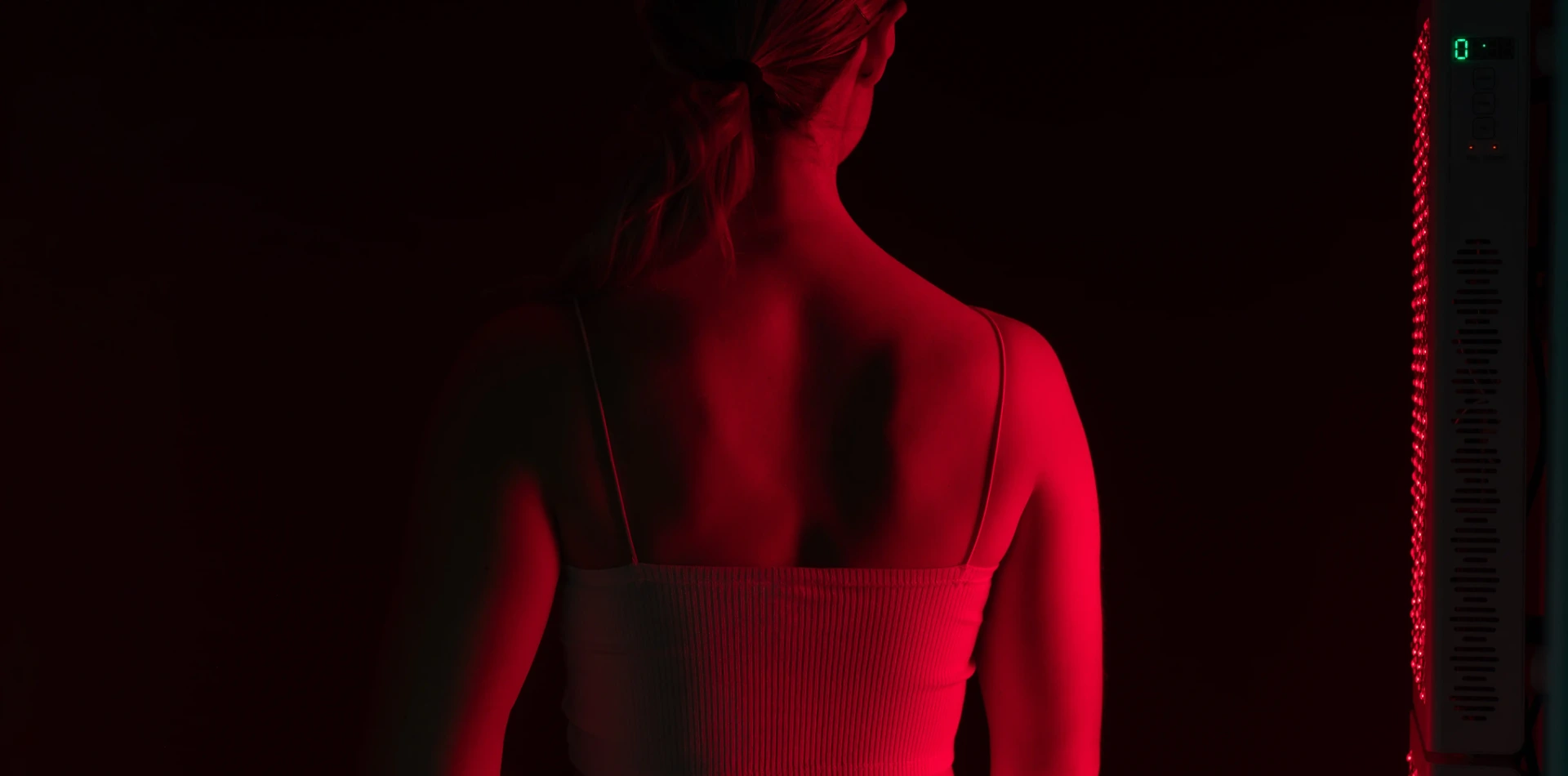
There are other targeted light treatments as well. Red light therapy, distinct from chromotherapy, penetrates tissues to stimulate cellular ATP production and promote skin healing.
Did You Know?
Medical light therapy and decorative chromotherapy are not the same thing. Some light-based treatments are well studied in clinical settings, while colored sauna lighting is best understood as a design and relaxation feature.
Commonly Used Colors and Their Effects
Color choices in chromotherapy blend tradition, psychology, and personal preference. Each color in chromotherapy is associated with distinct therapeutic and psychological properties such as relaxation, energy stimulation, and emotional balancing.
Red
Red is often used where people want warmth, energy, or a sense of increased circulation.
Orange
Orange is traditionally associated with optimism, warmth, and an uplifted mood.
Yellow
Yellow is often linked with brightness, focus, and a lighter emotional tone.
Green
Green light is commonly associated with calm, balance, and relaxation.
Blue
Blue light may feel cool and quiet, though saturated blue light should be used carefully in evening spaces because of its relationship to sleep cycles.
Violet / Purple
Violet and purple are traditionally associated with stillness, reflection, and a more meditative atmosphere.
These associations can be useful for design, but they should not be treated as guaranteed treatment outcomes.
Integrating Chromotherapy in Saunas and Spa Spaces
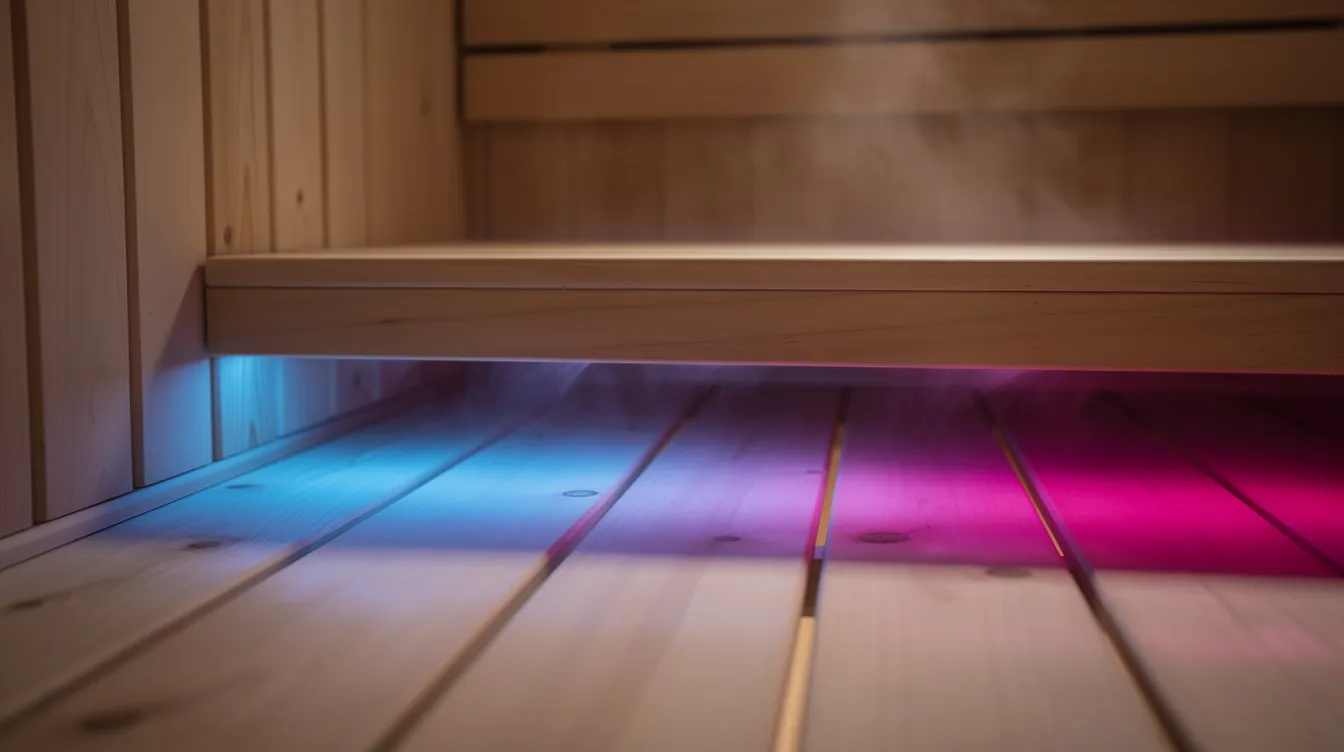
In saunas, chromotherapy usually appears as ceiling LEDs, cove lighting, under-bench strips, backlit salt walls, or fiber-optic points. The best effect rarely comes from shining colored light directly at the body. In our experience, it feels better when light washes cedar, hemlock, or other wood surfaces and lets the glow reflect softly into the room.
Caption
A good example is a 20-minute sauna session with warm white at the start, a gentle green light for unwinding, and a low amber tone near the end. This process supports mood without making the room feel theatrical. For evening use, we are careful with saturated blue because of its effect on sleep.
Practical Lighting Design for Custom Saunas
When we design custom saunas, we treat chromotherapy as one layer in a broader lighting plan. Start with warm white light for visibility, then add colored light as an accent.
- Place fixtures behind backrests, under benches, or in perimeter coves to avoid glare.
- Use heat- and humidity-rated LEDs, sealed housings, and appropriate electrical installation.
- Choose dimmable controls with simple presets: warm white, soft blue, green, amber, and slow cycle.
- Consider the wood. Warm woods deepen red and amber; pale woods show color more clearly.
- Keep the experience calm. Rapid cycling can feel distracting in a hot room.
Questions to Ask Before Adding Chromotherapy
Will the lighting be used mainly for relaxation, ambiance, or visual interest?
This helps determine whether the lighting should be soft and indirect, more colorful and expressive, or primarily used as a subtle accent within the sauna or wellness space.
Where should the fixtures be hidden?
Fixture placement affects glare, comfort, and the overall quality of the lighting. Behind backrests, under benches, and inside coves often creates a softer effect than exposed fixtures.
Which wood species is being used?
Different woods reflect colored light differently. Warm woods can deepen amber and red tones, while lighter woods may show green, blue, or violet lighting more clearly.
Should the colors change automatically?
Slow color transitions can feel calming, but rapid cycling can feel distracting in a hot room. Planning the control style early helps keep the experience comfortable.
Will the lighting be controlled from inside or outside the sauna?
Controls should be easy to reach, simple to understand, and appropriate for the sauna environment. This is especially important when using presets, dimmers, or color-changing LEDs.
A Balanced View on Chromotherapy Claims
A critical analysis of chromotherapy should acknowledge both interest and limits. Chromotherapy utilizes wavelengths in the visible region of the electromagnetic spectrum to produce biological effects in living cells and tissues. Some research explores how specific wavelengths may interact with cells, mood, and stress responses.
However, contemporary clinical research indicates that chromotherapy lacks robust scientific evidence as a cure for physical diseases. Some studies suggest that specific wavelengths can trigger localized psychological and physiological responses such as stress reduction and mood enhancement. Chromotherapy is largely used as an adjunctive, holistic treatment to reduce stress and promote a sense of well-being, but there is limited mainstream scientific evidence supporting it as a cure for diseases.
Everyday Ways to Use Color and Light for Comfort
You do not need a full spa to apply simple ideas about chromotherapy. Use brighter light in the morning, softer warm light in the evening, and avoid intense screens before bed. In bathrooms, tubs, or relaxation spaces, dimmable warm-white light with subtle colored accents can make the room feel more settled.
Many benefits are personal. One person may relax under green; another may prefer amber. The goal is not to force balance, ease depression, cure anxiety, or promise healing. The goal is to create a space where the body can relax and the mind can settle.
Chromotherapy FAQs
Is chromotherapy scientifically proven to heal specific medical conditions?
No. Chromotherapy is not proven as a standalone cure for disease, pain, depression, diabetes, anxiety, inflammation, or other health conditions. Some light-based therapies are well studied, but broad color healing claims need caution.
Is chromotherapy safe to use in a home sauna or bathroom?
For most healthy adults, colored LED exposure at normal brightness is low risk. The bigger concern is installation: fixtures must be rated for heat, moisture, and the specific sauna environment.
How long should a chromotherapy session last?
There is no universal dose. Most people simply align it with a sauna session, often 15–30 minutes, and adjust brightness or color based on comfort.
Can I add chromotherapy lighting to an existing sauna?
Often, yes. Indirect LED strips under benches or in ceiling coves can






.png)