A Himalayan salt wall changes the way a sauna feels before anyone sits down. The glow, texture, and warmth of pink or white salt bricks can turn a compact hot room into a more serene spa environment, especially when the feature is designed with realistic expectations and careful detailing.
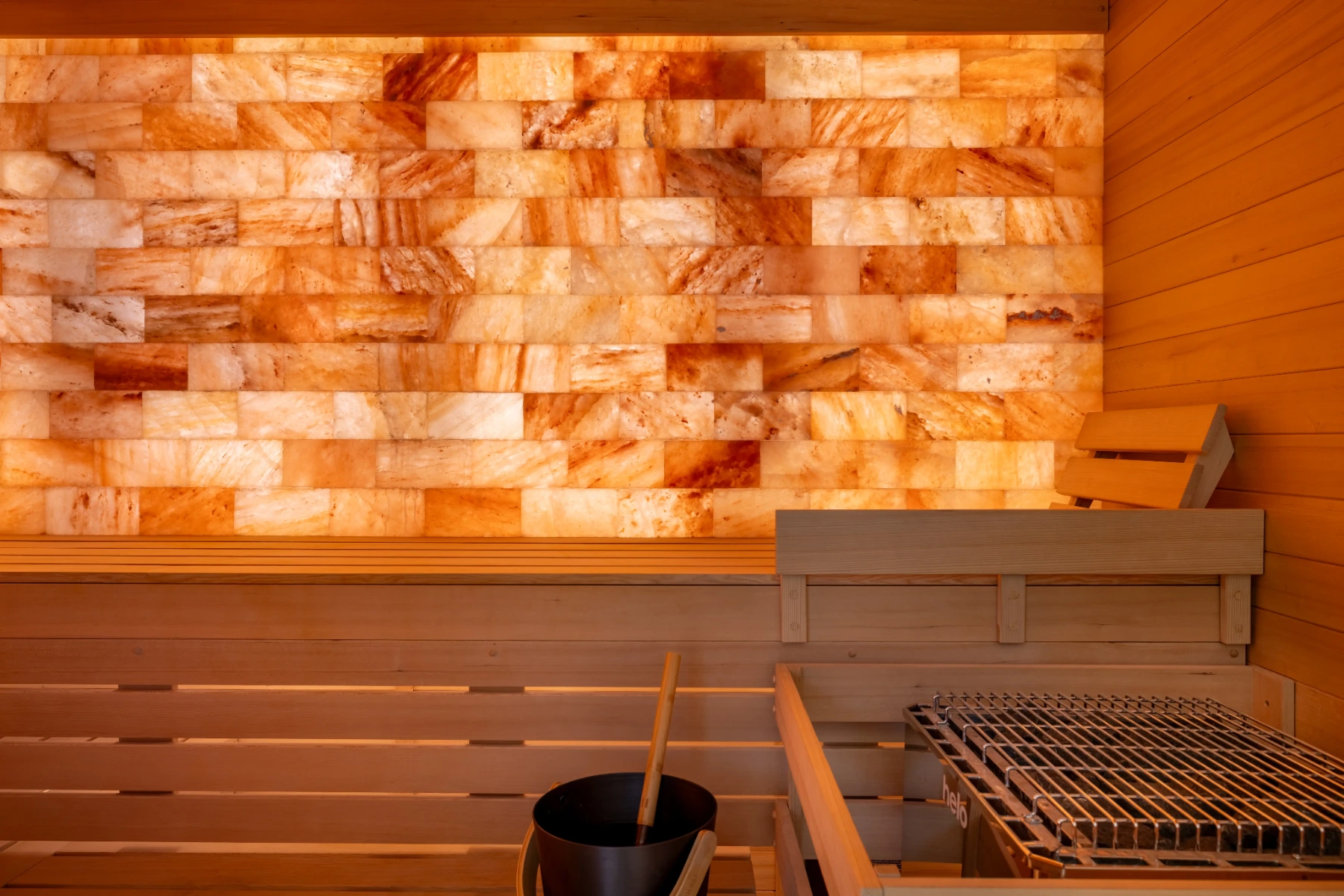
A backlit Himalayan salt brick wall creates a warm, inviting focal point that enhances the atmosphere of a custom sauna.
Key Takeaways
Himalayan salt walls are commonly used in custom saunas to create a warmer, softer, and more spa-like atmosphere.
Most customers choose a salt wall for ambiance, lighting, aesthetic value, and sensory relaxation rather than dramatic medical claims.
Backlit salt walls add depth, texture, and calming indirect light to traditional and infrared sauna settings.
Many people associate salt therapy with easier breathing, but strong health claims around passive salt walls should be viewed carefully.
Placement, LED lighting, moisture control, and proper installation matter more than the amount of salt used.
What Is a Himalayan Salt Wall?
A Himalayan salt wall is a decorative wall feature built from solid Himalayan salt bricks, often illuminated with concealed LED lighting. The natural variation in color, crystal pattern, and translucency means every installation is unique, making salt walls a popular focal point in custom sauna design.
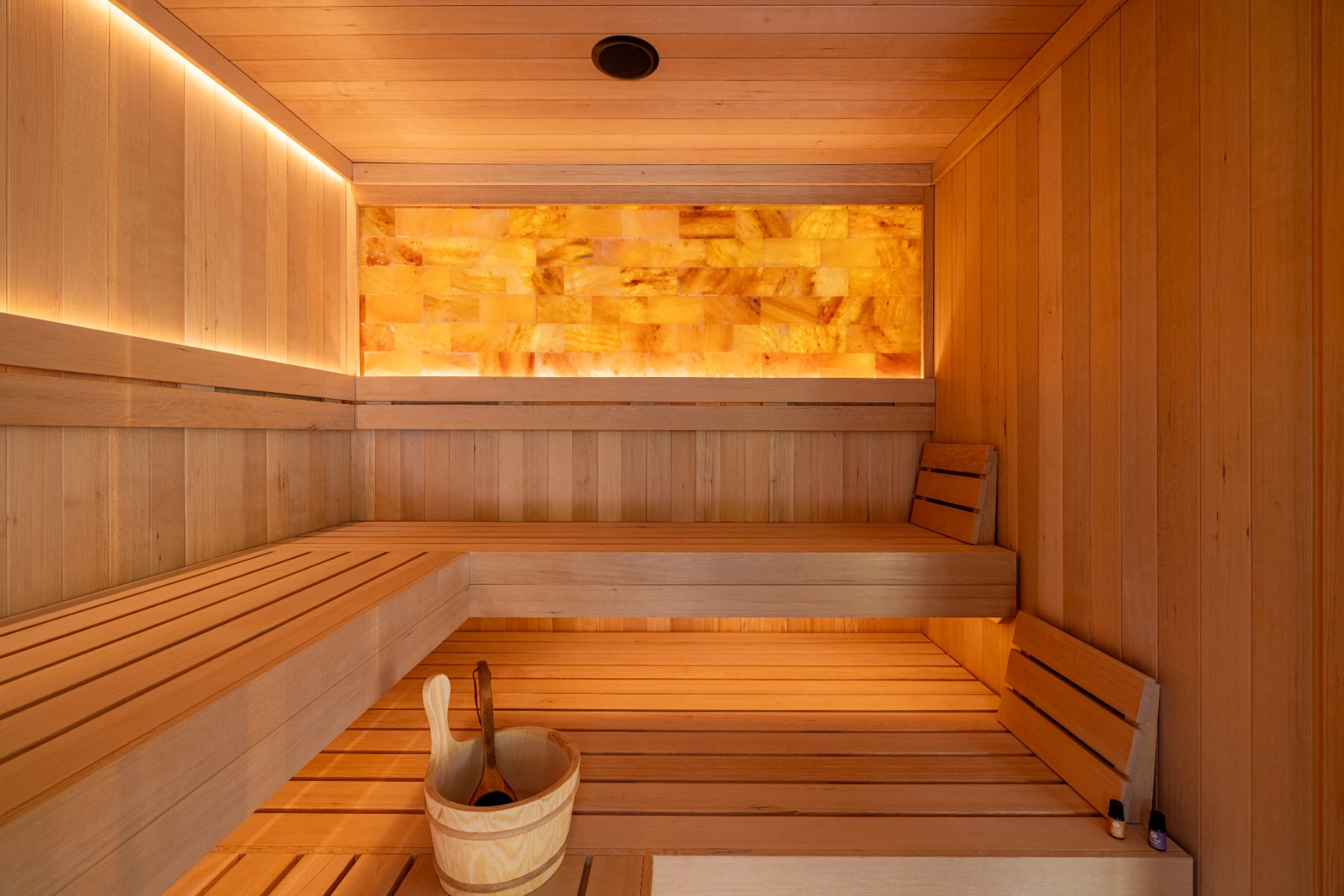
A backlit Himalayan salt brick wall adds texture, warmth, and soft ambient light to a sauna interior.
You will often see Himalayan salt walls in custom saunas, salt rooms, meditation rooms, yoga studios, spas, wellness centers, and private residential wellness spaces. In a sauna, the salt wall functions as both a visual feature and a lighting element, helping soften the room and create a calmer environment.
Most pink Himalayan salt comes from the Khewra Salt Mine region in Pakistan, near the Himalayan mountains. The salt can range from soft pink to amber, rust, and even white tones. No two salt bricks are exactly the same, and the natural mineral variation gives each wall its own character.
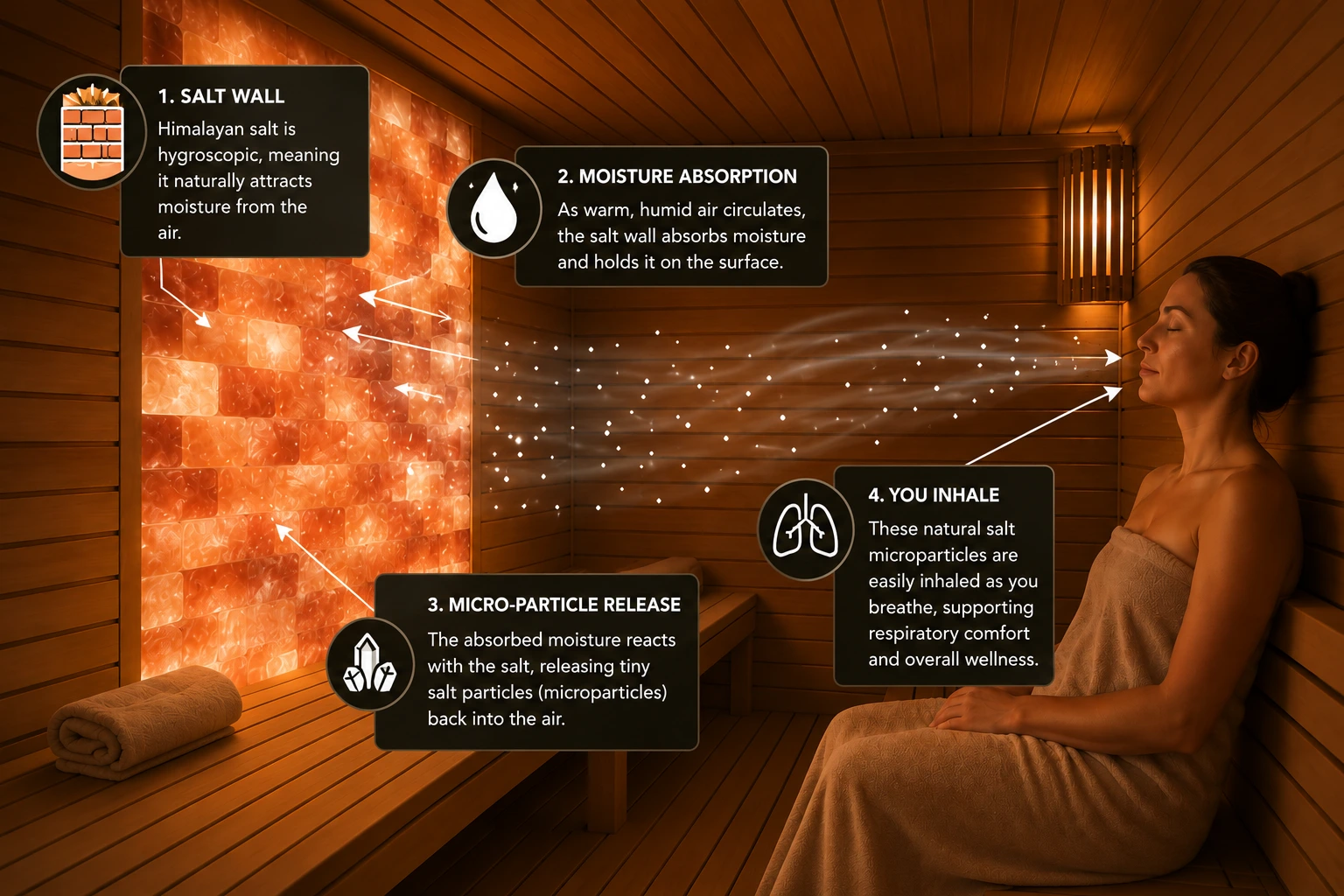
In a heated room, Himalayan salt gently warms and interacts with circulating air. Because salt is hygroscopic, meaning it naturally attracts moisture from humid air, prolonged exposure to excessive moisture can cause the surface of the salt bricks to show subtle crystallization or “sweating.”
Sauna heat itself is usually not the issue. Direct water exposure is. Salt bricks should not be sprayed, splashed, or exposed to standing moisture. During the design process, we carefully consider placement, ventilation, and nearby water sources to help protect the installation over time.
We have seen salt walls near indoor pools begin to sweat because of the consistently humid environment. That kind of real-world condition is why proper placement and moisture planning are so important in any sauna or wellness room design.
Himalayan salt walls perform best in sauna environments where there is some humidity or moisture present. In our experience, salt walls are not typically recommended for very dry sauna environments because a small amount of moisture helps the salt maintain the appearance and atmosphere homeowners expect. During the design process, we carefully consider heater type, humidity, ventilation, and wall placement to create the best long-term results. In our sauna projects, we usually place the wall opposite the heater, behind benches, or in a location where gentle warmth and lighting can create a glow without stressing the salt.
The contrast with cedar, hemlock, aspen, or alder is part of the appeal. Salt softens wood visually and helps create a calm, natural environment rather than a harshly lit box.
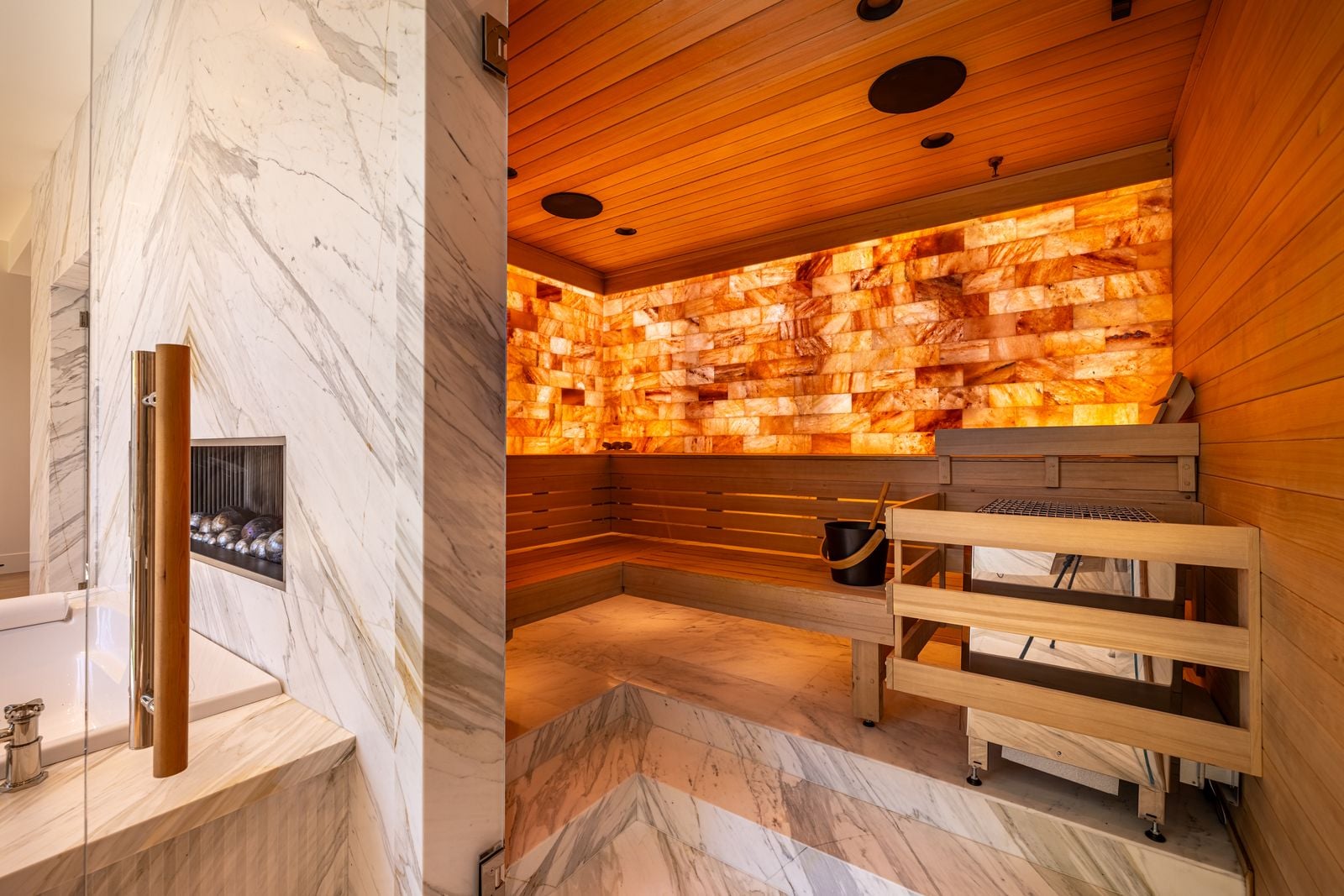
This completed Vintage Cellars custom sauna features an illuminated Himalayan salt brick accent wall integrated into an L-shaped bench layout. Explore this Rancho Santa Fe custom sauna project.
Ambiance, Lighting, and Sensory Experience
Most people notice the light first. A backlit salt wall emits a warm, inviting glow that feels softer than standard overhead fixtures. This is one reason salt walls are so popular in wellness spaces such as spas, meditation rooms, and custom home saunas.
Using a transparent plexiglass backing allows light to pass evenly through the salt while providing a stable mounting surface for the bricks. Combined with concealed LED lighting, the system creates consistent illumination across the entire wall while keeping the lighting components hidden from view.
Veins, marbling, and color variation in Himalayan salt crystals make the wall feel alive. In our experience, a well-placed salt wall often becomes the detail people remember most about the sauna.
Watch how backlit Himalayan salt brick walls add warmth, texture, and ambiance to custom sauna designs.
Perceived Wellness and Salt Therapy Benefits
While traditional Finnish saunas have been built from wood for centuries, Himalayan salt walls are a relatively modern design feature that became popular in luxury spas and wellness centers during the early 2000s. Their popularity grew as homeowners began seeking more immersive, spa-inspired sauna experiences that combined natural materials, ambient lighting, and wellness-focused design.
Salt therapy is often described as exposure to airborne salt particles for respiratory comfort. However, it is important to distinguish between an active halotherapy room and a passive Himalayan salt wall. Active halotherapy rooms use specialized equipment to disperse fine salt aerosol into the air. A decorative salt wall in a sauna mostly provides visual, atmospheric, and experiential benefits.
A salt wall is best understood as a sensory and design feature rather than a medical treatment.
Many homeowners describe the atmosphere around a Himalayan salt wall as calming, warm, and refreshing. While some people associate salt therapy with respiratory comfort, passive salt walls in home saunas should not be presented as a substitute for active halotherapy or medical treatment.
You may see claims that heated Himalayan salt releases negative ions, purifies the air, or offsets the effects of electronics. We treat those claims carefully. The measurable clinical effects from a decorative salt wall are not well established. For most homeowners, the primary value is the way the wall changes the feeling of the space: softer lighting, natural texture, visual warmth, and a more spa-like environment.
Common Ways We Incorporate Himalayan Salt Walls
Salt walls can be designed in several ways depending on the size of the sauna, the lighting goals, and the overall design style.
Full Feature Wall
A full back wall of Himalayan salt bricks creates the most dramatic effect. This approach works especially well in larger saunas where the wall can be seen from the benches, through glass, or from an adjacent wellness space.
Accent Section
A smaller grouping of salt bricks can introduce warmth and texture without covering an entire wall. This is often a good option for compact saunas or designs where the salt should complement the wood rather than dominate the room.
Bench Backdrop
Salt walls are often placed behind the upper bench so the glow becomes part of the user’s field of view. This can make the sauna feel more immersive while keeping the feature integrated into the seating layout.
Visible Through Glass
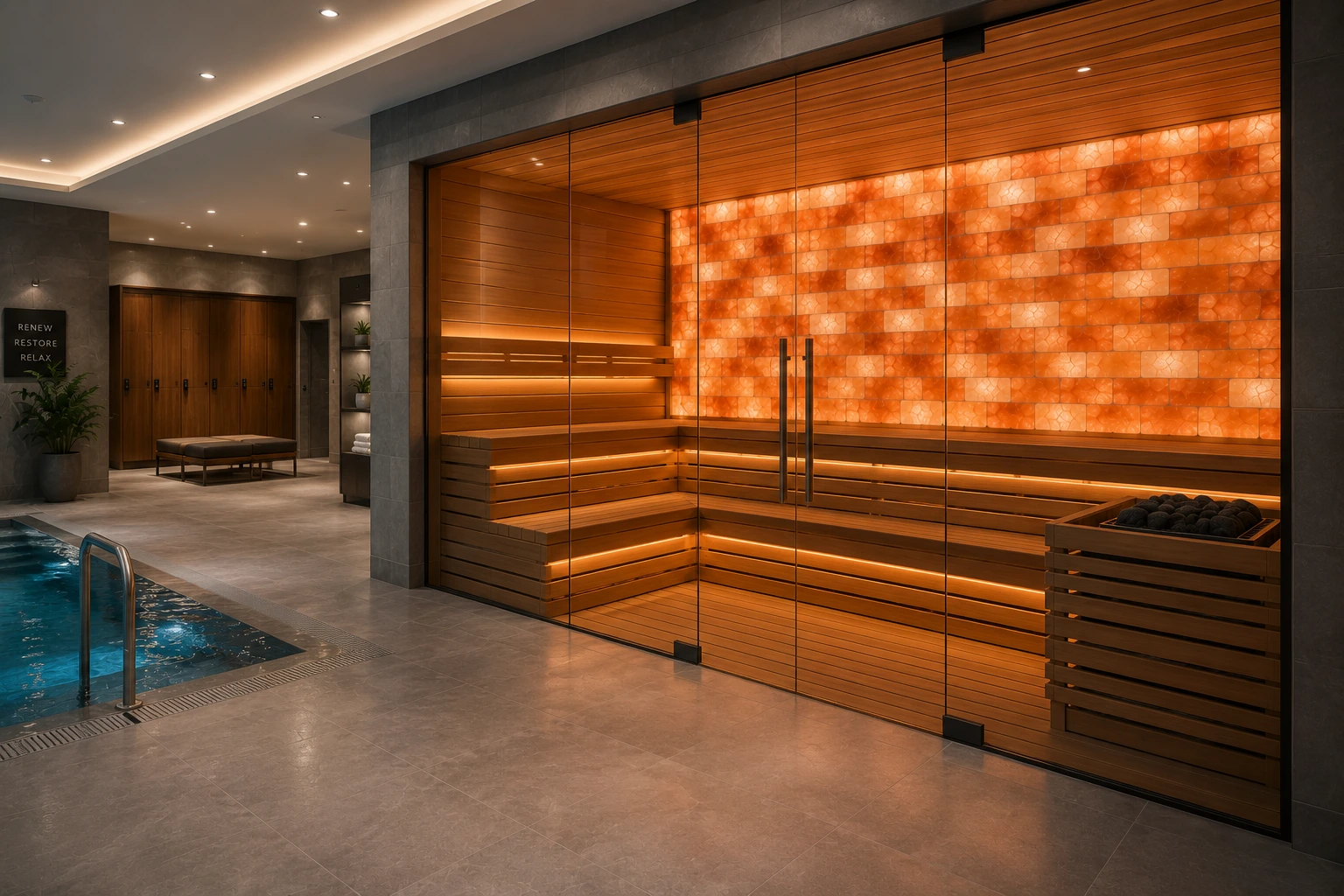
In some designs, the salt wall is placed where it can be seen through a glass sauna door or glass front. This allows the wall to function as an architectural feature for the surrounding bathroom, home gym, or wellness room as well as the sauna interior.
Pink vs. White Himalayan Salt Bricks
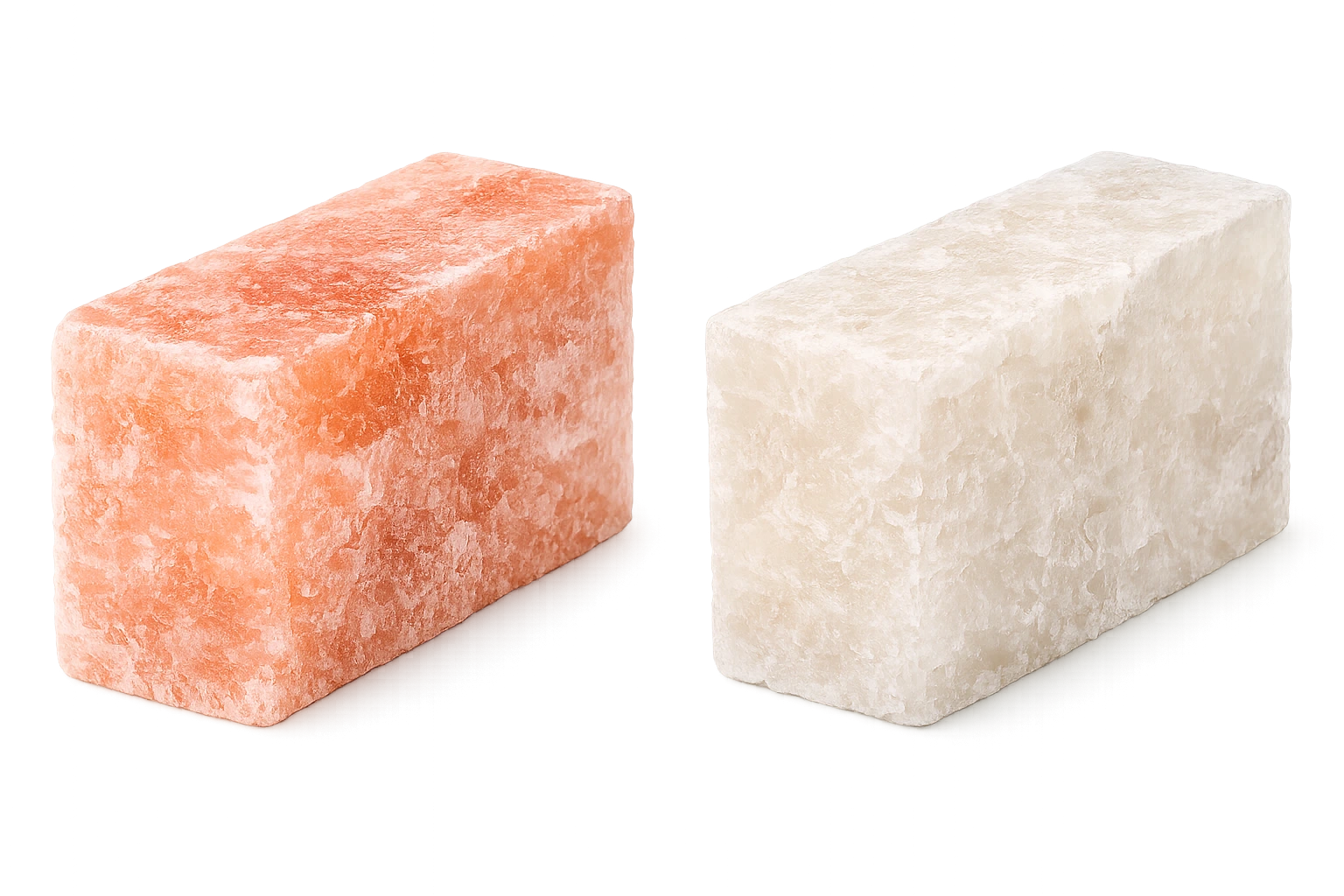
Pink Himalayan salt bricks are the most recognizable option and create the warm amber glow many homeowners associate with luxury spas. They pair especially well with warm woods like cedar and hemlock.
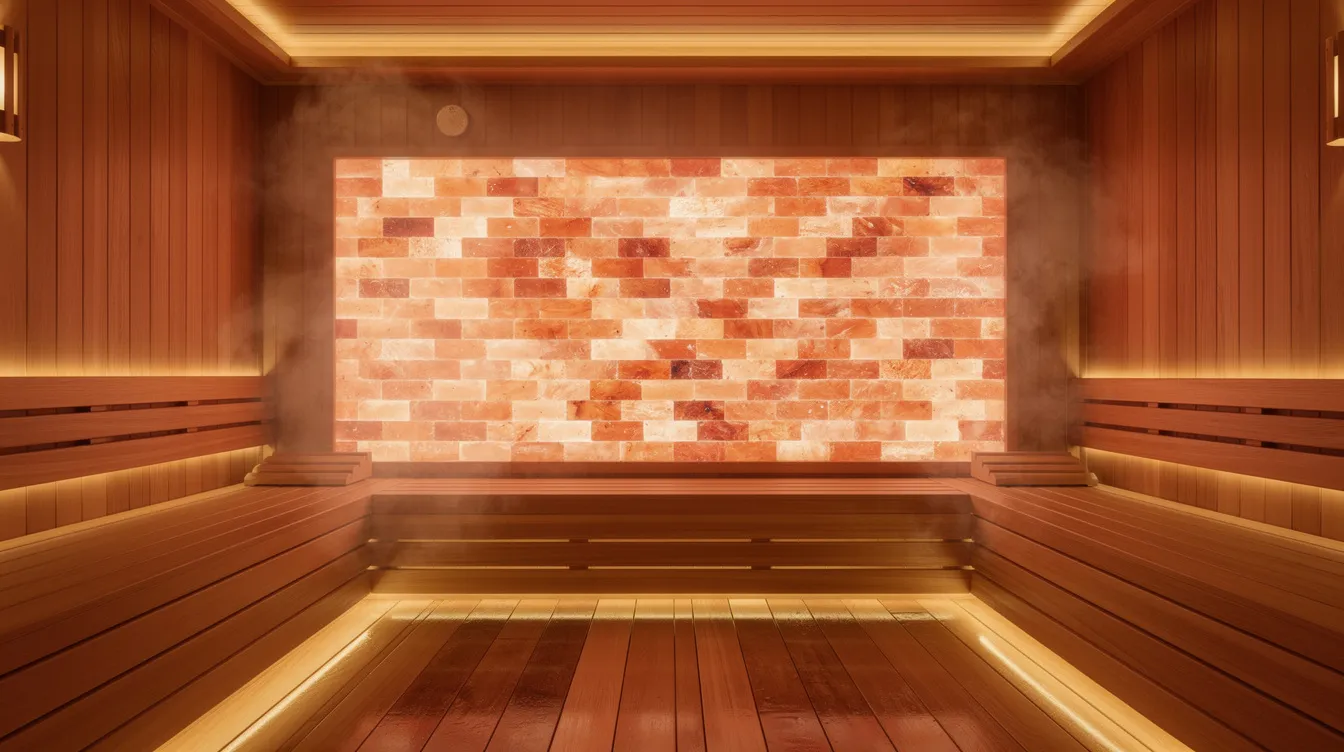
Pink Himalayan salt bricks create the warm amber glow commonly associated with luxury spas, while white Himalayan salt bricks offer a brighter, more contemporary aesthetic. Both can be incorporated into custom sauna designs depending on the desired atmosphere.
White Himalayan salt bricks offer a cleaner, brighter, and more contemporary look. They can work well in modern sauna designs, lighter wood interiors, or spaces where the goal is a softer Scandinavian feel.
When we design a custom sauna, the choice between pink and white salt bricks usually comes down to the desired atmosphere, the surrounding wood species, and how the wall will be lit.
Designing a Himalayan Salt Wall for a Sauna
A successful salt wall design balances beauty, structure, lighting, and heat. We start with sightlines: should the wall be visible through glass, from the bench, or as a backdrop?
Placement matters more than simply using a large amount of salt. Some saunas benefit from a full back wall, while others feel better with a smaller accent section. The right choice depends on the room size, bench layout, glass placement, and how much visual emphasis the homeowner wants the salt wall to have.
Ceiling height is one of the most important factors in sauna performance overall. In our experience, a ceiling around 7 feet helps keep the warmest air closer to head height for users sitting on the upper bench. Taller ceilings allow more heat to collect above the seating area, which can make the sauna feel less efficient and less comfortable.
Wood tone matters too. Cedar warms the amber glow; pale spruce creates a cleaner Scandinavian contrast. We often pair the salt wall with indirect ceiling or under-bench lighting so the salt remains the focal point without overwhelming the room.
A successful salt wall should feel integrated with the sauna layout, lighting, and wood selection.
Materials, Bricks, and Construction Basics
Salt walls are decorative, non-structural features that require careful planning and precise installation. At Vintage Cellars, we mount the Himalayan salt bricks to a plexiglass backing using a heat-resistant adhesive specifically selected for the sauna environment. Behind the plexiglass, integrated LED lighting illuminates the natural translucency of the salt bricks, creating the warm glow that makes illuminated salt walls such a distinctive design feature.
During the design process, we coordinate the framing, backlighting, wiring access, surrounding finishes, and moisture exposure before the first salt brick is installed. This planning is especially important because salt is softer and more fragile than wood, stone, or tile.
Achieving the ideal visual appearance of an illuminated Himalayan salt wall depends on precise installation. The lighting system is integrated behind the salt bricks during construction, planning the wall layout before installation begins is essential to achieving even illumination and the desired visual effect. Careful alignment of the salt bricks, consistent spacing, along with balanced backlighting all contribute to creating a uniform, natural-looking wall that highlights the unique color and texture of each brick. Materials should also be protected during delivery and handling because the edges can chip easily.
Moisture, Heat, and Longevity Considerations
Preventing direct water exposure is critical for long-term performance. Himalayan salt naturally attracts moisture, so excessive humidity, splash, and trapped condensation can cause the salt to sweat or change texture over time.
Dry cleaning is best. Use a soft cloth or brush, and avoid water or harsh cleaners. In traditional saunas, we keep steam splash away through thoughtful placement, glass partitions, or elevation above splash zones.
We also avoid placing salt walls on exterior walls unless insulation and vapor control are carefully detailed. This helps reduce the risk of condensation inside the wall cavity and supports the long-term stability of the installation.
Integrating Salt Walls into Custom Wellness Spaces
A salt wall rarely stands alone. It may connect visually with a sauna, steam shower, cold plunge, relaxation lounge, hallway, or bathroom visible through glass.
In custom designs, we align the salt with benches, ceiling slats, stone floors, plaster, and lighting coves so the room feels consistent. Homeowners increasingly see salt walls as part of experiential wellness: less a treatment room, more a place to slow down.
Commercial wellness facilities often integrate backlit Himalayan salt brick walls into custom saunas, creating a striking focal point while connecting the sauna to nearby pools, locker rooms, and relaxation spaces.
Planning a Himalayan Salt Wall for an Existing Sauna
Many people first enjoy a salt sauna at a spa and then become interested in adding one at home. A retrofit should begin with structure, heater clearances, humidity exposure, electrical access, and the desired visual impact.
In many retrofit projects, a smaller accent wall behind the upper bench provides a strong visual effect with fewer structural changes than rebuilding an entire wall. In other homes, placing the salt wall outside the hot room where it remains visible through a glass sauna front offers many of the same design benefits while reducing long-term moisture exposure.
Key Questions to Ask Before You Build
Is the goal ambiance, softer evening light, salt therapy association, or a design statement?
This question helps define the purpose of the salt wall before the design begins. A wall intended mainly for warm lighting may need different placement, LED controls, and scale than one meant to be the room’s main visual feature or part of a broader wellness experience.
How close will the wall be to heat, steam, and water?
Salt is sensitive to moisture, splash, and environmental conditions. Asking this early helps determine whether the wall should be placed opposite the heater, behind a bench, elevated from splash zones, or located outside the hot room where it can still be seen through glass.
Will wiring, LEDs, and controls remain accessible?
Backlighting is one of the main reasons homeowners choose Himalayan salt walls, but LEDs and controls may eventually need service. Planning access before installation helps avoid tearing into finished walls later.
How will the wall look through glass from nearby spaces?
A salt wall often becomes a focal point beyond the sauna itself. Considering sightlines from a bathroom, hallway, gym, or wellness room can help determine the best wall location, lighting level, and overall scale.
Should the feature be a full wall or a smaller accent section?
Full salt walls create a dramatic spa-like focal point, while smaller accent sections can provide warmth and texture without overpowering a compact sauna. The best option depends on the sauna size, layout, lighting plan, and overall design goals.
Himalayan Salt Walls Calming Effect
A Himalayan salt wall is primarily about atmosphere: warm light, natural texture, and emotional calm. While many people associate salt with wellness benefits, the most reliable value is experiential.
In our experience designing saunas and wellness spaces, the best salt walls feel integrated with wood, layout, lighting, and moisture control. Used thoughtfully, a salt wall becomes one of several tools that shape a restorative sauna experience.
Himalayan Salt Wall FAQs
Do Himalayan salt walls actually purify the air in a sauna?
They may change how the air feels, but strong clinical air purification claims are not well supported. Ventilation, humidity control, and cleanliness matter most.
Can I install a Himalayan salt wall near the sauna heater?
Usually, no. Keep a safe distance from direct radiant heat, steam, and splash, and follow heater clearance guidelines.
How much maintenance does a Himalayan salt wall require?
A Himalayan salt wall requires very little maintenance. We recommend dusting it occasionally with a soft, dry cloth or brush and avoiding direct water exposure. Proper placement and ventilation are the biggest factors in maintaining its appearance over time.
Will a salt wall damage nearby metal fixtures?
Risk is low in a dry, ventilated sauna, but damp salt can corrode metal. Use stainless or corrosion-resistant finishes nearby and avoid placing sensitive metal components where salt moisture may collect.
Is a Himalayan salt wall suitable for small home saunas?
Yes. A modest backlit panel, vertical strip, or smaller accent section often feels more balanced than covering a full wall in a compact room.
Written by
Chris Noel
: Christopher Noel has been in the wine cellar industry for 15+ years, 10 of those served as a former employee of Vintage Cellars. Chris is a hands-on specialist in superior customer service, advanced wine cellar design, and sauna design, able to handle the most difficult design applications in the industry. In his spare time, Chris helps run his wife's Mexican Art import company and loves to cook and spend time with his son.
Vintage Cellars started building custom wine cellars in 1990 and custom saunas in 2015. Based in San Macros, California, we have built custom saunas and wine cellars throughout the United States.
Our sauna and steam design experts are waiting to turn your custom sauna dream into a reality. Tell us the room size, budget, and other details and we will design the custom sauna of your dreams.







.png)